
Concrete Testing Instruments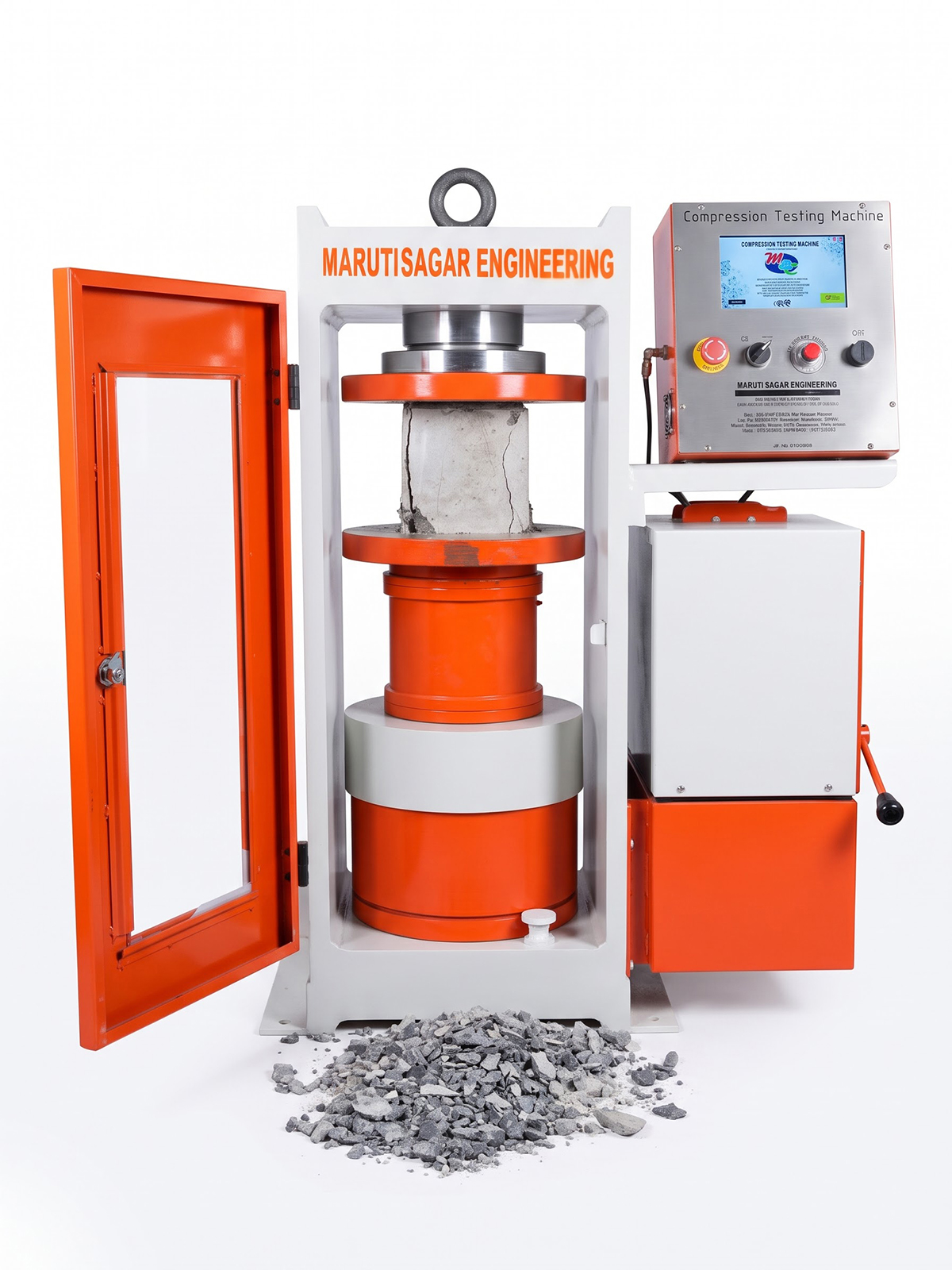
Compression Testing Machine Digital 2000kn
- Product Model:Digital Compression Testing Machine (Manual Pace Control)
- Capacity:2000 kN
View Details
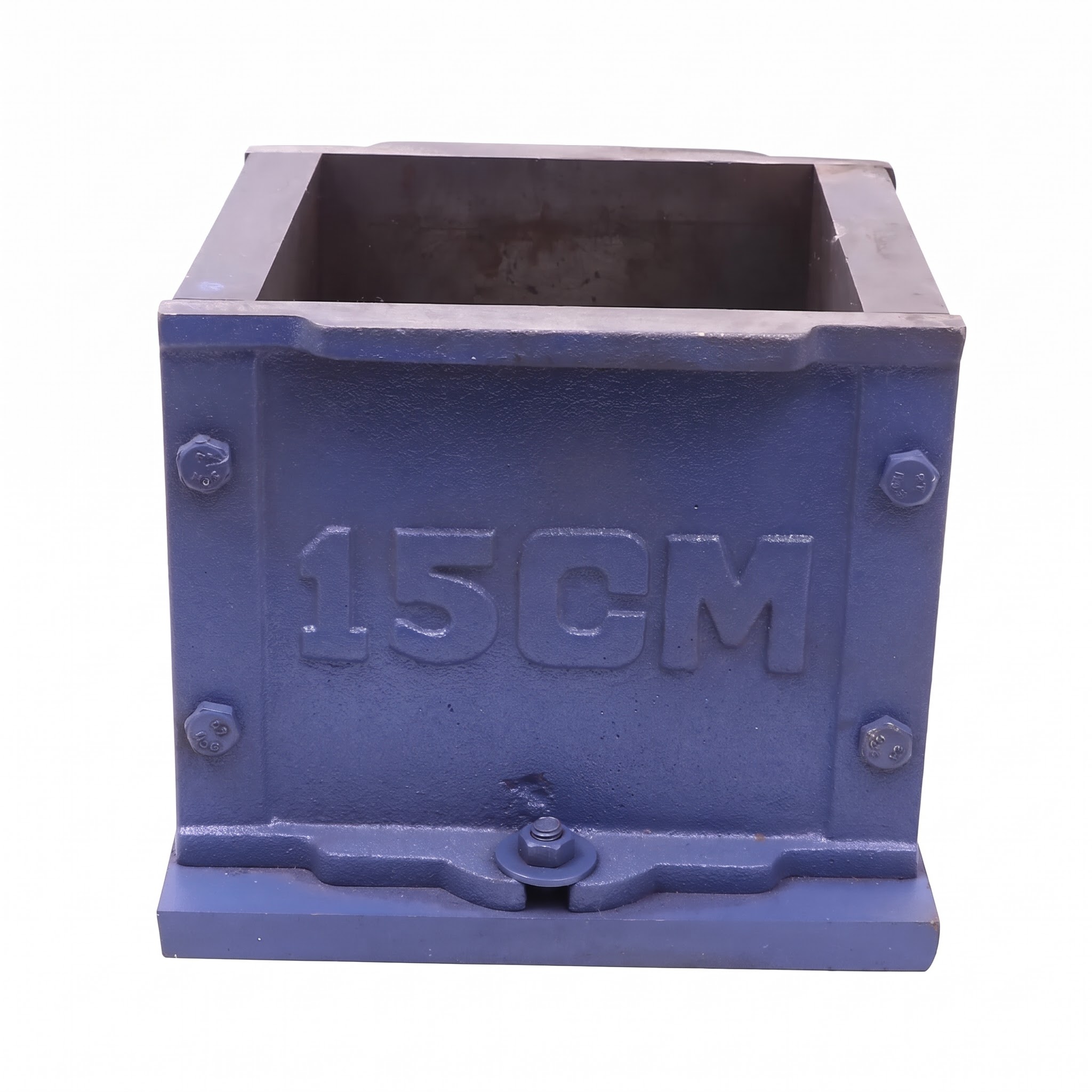
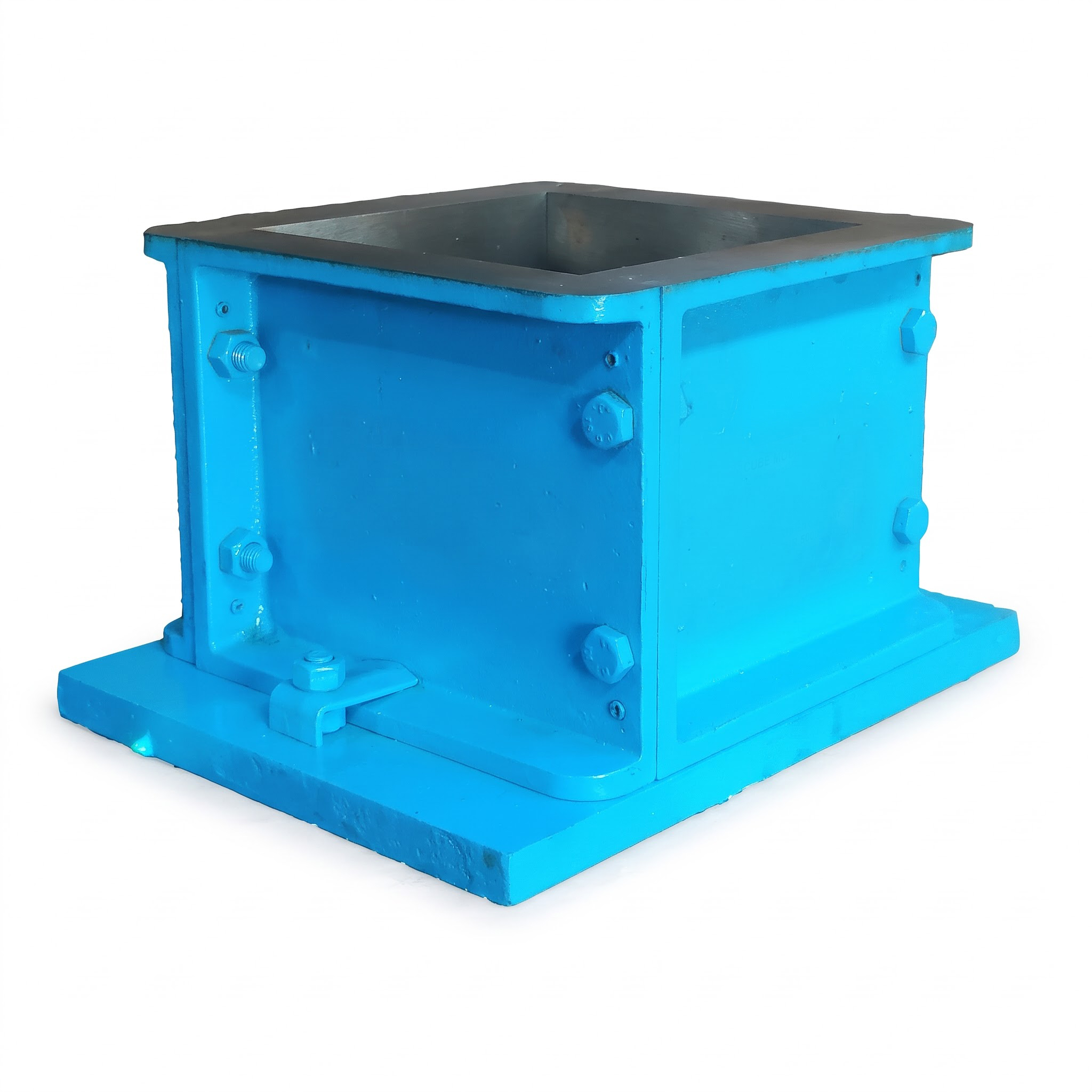
This 150 mm Cast Iron Cube Mould is engineered for casting uniform concrete test specimens used in standard compressive strength evaluations. Manufactured from heavy-duty, wear-resistant cast iron, it withstands rigorous laboratory tamping and vibrating table compaction without warping or distortion, making it a reliable staple for civil engineering laboratories, RMC plants, and construction field testing.
The mould features a precision four-part split body securely anchored to a detachable cast base plate using heavy-duty wing nuts and alignment clamps. Its internal faces are finely machined to tight dimensional tolerances with a smooth surface finish, preventing slurry leakage, ensuring true 90-degree angles, and allowing quick, damage-free demoulding of cured concrete cubes.
Bulk pricing available
| Technical Specifications | |
|---|---|
| Product Type | Concrete Cube Test Mould |
| Specimen Size | 150 × 150 × 150 mm |
| Material of Construction | High-grade cast iron (CI) |
| Structural Design | Four-part split wall with detachable base plate |
| Fastening Mechanism | Heavy-duty steel bolts / wing-nut clamping system |
| Dimensional Tolerance | ± 0.1 mm to ± 0.2 mm |
| Internal Surface Finish | Fine-machined face (surface roughness ≤ 3.2 µm) |
| Approximate Weight | 7 kg to 16 kg (varies by wall thickness/grade) |
| Standard Compliance | IS: 10086-1982, BS 1881: Part 108, EN 12390-1 |
Essential technical, operational, and standard compliance answers for the Cube Mould 150mm ci casting.
The Cube Mould 150mm ci casting is precision-manufactured with true internal dimensions ± 0.1 mm to ± 0.2 mm. It is fabricated from High-grade cast iron (CI) to ensure dimensional stability and zero flexure during compaction.
This mould strictly satisfies IS: 10086-1982, BS 1881: Part 108, EN 12390-1, including IS: 10086 and IS: 516 specifications for concrete and mortar specimen casting moulds.
The machined cast iron construction provides maximum rigidity, perfectly planar perpendicular faces (within ±0.2 mm), and a bolted base plate that prevents slurry leakage during vibration.
Coat internal surfaces with a thin film of non-reactive mould release oil before casting. Compact fresh concrete in layers using a tamping rod or vibrating table. Cure in a moist room for 24 hours before stripping the mould.
Clean all internal surfaces immediately after demoulding with a soft brass wire brush or cloth. Keep joint faces free of dry slurry buildup and apply a protective oil coat to prevent oxidation on metal surfaces.
Yes, Maruti Sagar Engineering supplies moulds in individual and bulk batch lots to commercial testing labs, ready-mix concrete (RMC) plants, and infrastructure contractors across India with warranty coverage and dimensional inspection test certificates.
We stock tripods, leveling staffs, and protective cases for all our surveying instruments.